Blog · 10 September 2026 · 4 min read
Floor Aftercare — Why Detergent Causes Streak Marks (and What to Use Instead)
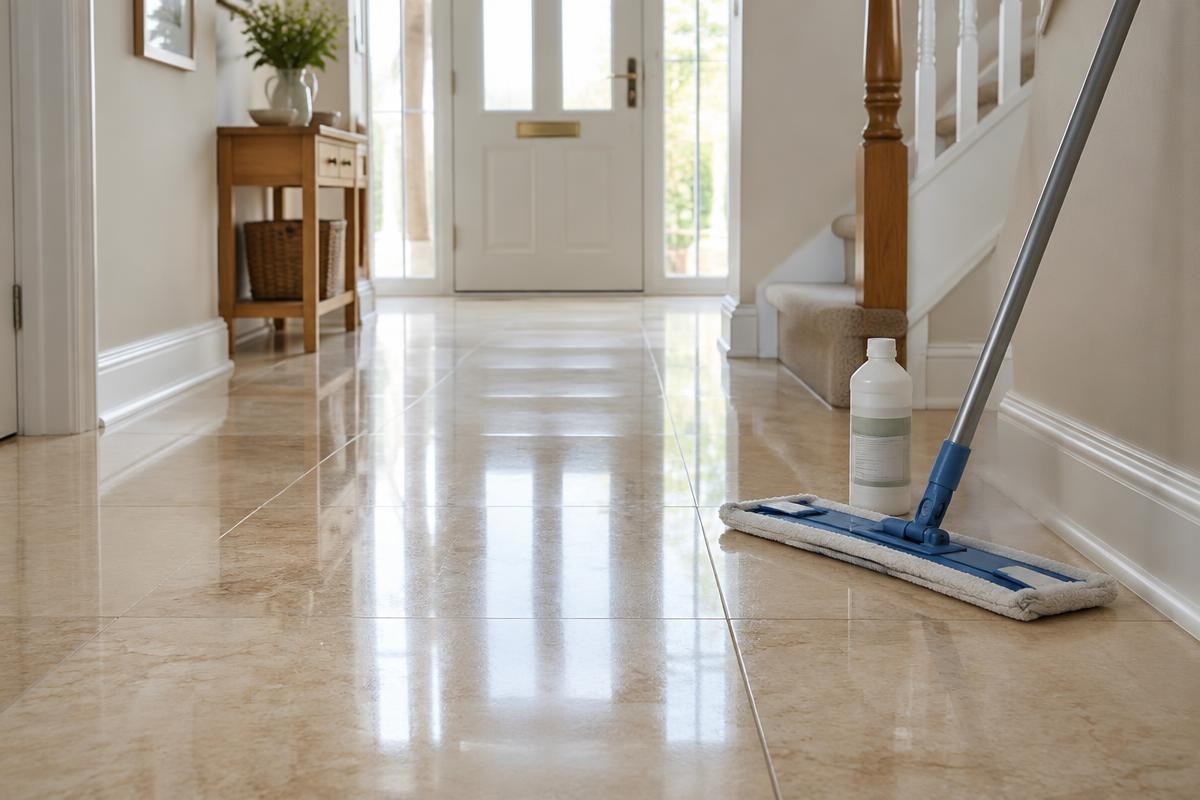
We spend days stripping away years of dirt, old sealers and cleaning build-up to bring a floor back to life — and then, a couple of weeks later, we get the call: "it's gone streaky again." Nine times out of ten, the culprit is the same: a detergent-based floor cleaner from the supermarket.
Why detergent causes streak marks
Detergent cleaners are designed to lift grease and dirt — but they never rinse away completely. Every time you mop with one, a thin, invisible film of detergent is left behind on the surface. One clean won't show. But clean after clean, that film builds up.
That film is what causes the streaks and smears you see in daylight or under hallway lighting: the dried detergent catches the light unevenly across the floor. Worse, the residue is slightly sticky, so it grabs hold of every bit of dust and grit that comes through the door — which is why a floor cleaned with detergent often looks dirty again within days and needs cleaning again. It becomes a cycle: the more you use it, the more the floor seems to need it.
On natural stone it's even more of a problem. That built-up film sits on top of the polished or honed finish and mutes it, making marble and limestone look dull and lifeless no matter how much you mop.
What to avoid on your floor
A few common products that do more harm than good:
- Multi-purpose and "mop & shine" floor cleaners — detergent-based, and the ones with added wax just layer more film on top.
- Washing-up liquid — the same detergent residue, plus it's designed for grease, so it's used far too generously.
- Bleach — harsh on grout, discolours stone, and streaks badly.
- Vinegar and lemon-based cleaners — acids that etch marble, limestone and other polished stone, leaving dull marks that need professional honing to remove.
What to use instead — a non-detergent cleaner
The cleaner we recommend — and use ourselves for routine aftercare — is STS Floor Cleaner, a pH-neutral, non-detergent stone cleaner. Because it contains no detergent, it rinses away cleanly and leaves no film, so there's nothing to streak and nothing to attract dirt. It's safe on marble, limestone, granite, travertine, Victorian tiles, porcelain and ceramic alike.
Ask for one at any good tile or stone supplier — just check the label says pH-neutral and suitable for natural stone.
Our simple aftercare routine
- Dry dust-mop or vacuum regularly — grit walked in on shoes is what actually wears a floor down.
- Damp mop weekly with a flat mop. The cleaner is applied with a sprayer — a light mist over the floor (or onto the mop pad), measured as per the bottle's instructions. More isn't better — extra cleaner just leaves more film behind.
- Change the mop head as it fills up with soil — once the pad is loaded with dirt you're just spreading it around the floor instead of lifting it. Swap to a clean pad (they're cheap and machine-washable) and carry on.
- Wipe up spills quickly — especially oil, wine and anything acidic.
- Reseal every few years — a breathable penetrating sealer keeps stains from soaking in. If water no longer beads on the surface, it's time.
Follow that routine and your floor will stay looking the way it did the day we finished — no streaks, no film, no cycle of constant re-cleaning.
Floor gone streaky or dull from cleaning products?
We can strip away the built-up film and bring the finish back — free, no-obligation assessments across Dublin, Kildare, Wicklow and Meath.