Blog · 30 September 2026 · 4 min read
How We Polish and Seal Marble — The Faber Products We Trust
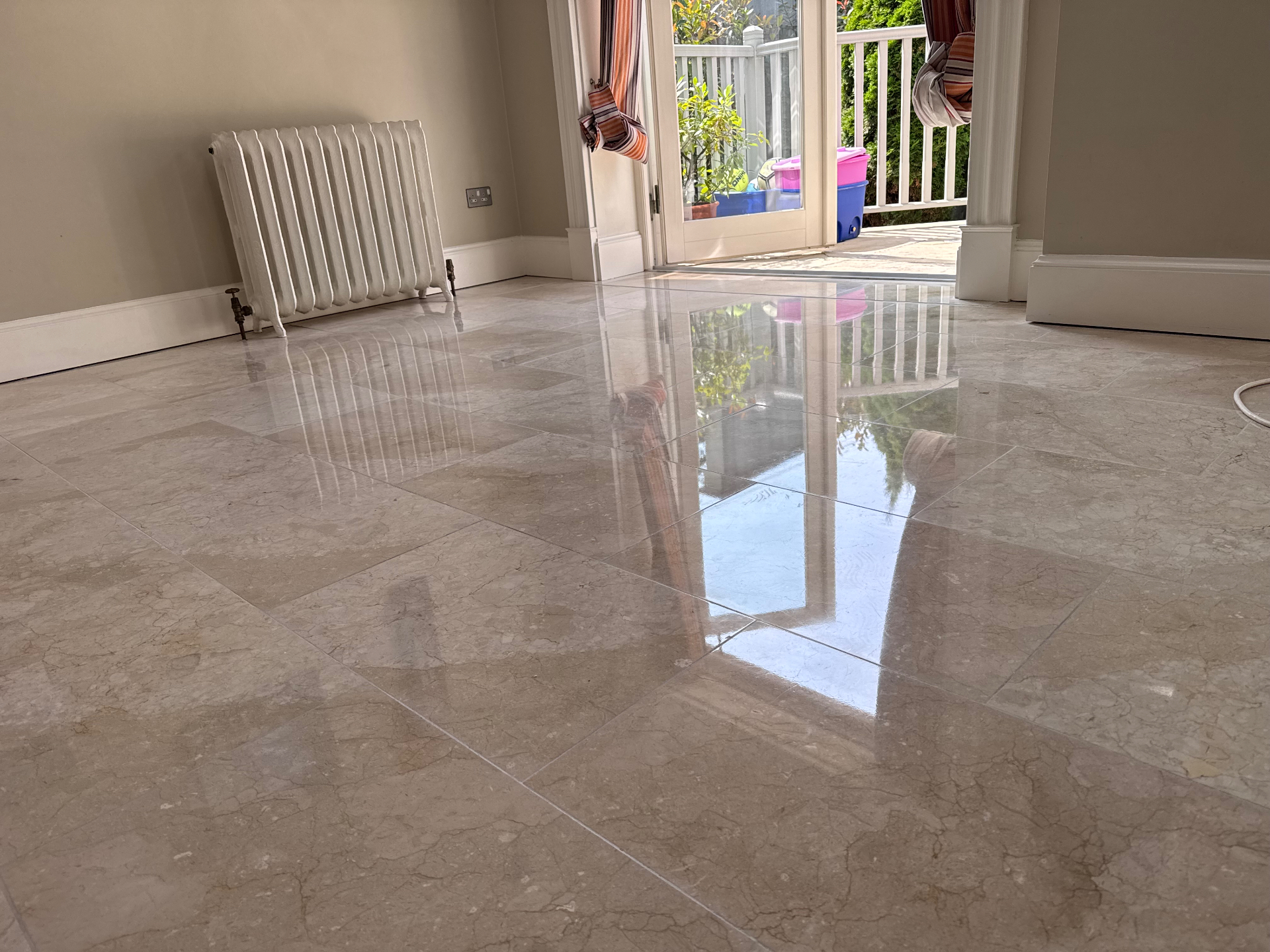
Customers often ask what we actually use on their floors. It's a fair question — the products matter as much as the machine work. Our answer is simple: we use Faber products, and only Faber products, on natural stone. We've trained in their systems and we follow their recommended process on every marble floor we restore. Here's what that process looks like.
Why Faber, and nothing else
Faber has been making stone care products in Italy for decades, and their range is built specifically for natural stone — not adapted from general cleaning chemicals. Every product is designed to work with the one before and after it, so the clean, the polish and the sealer all support each other. Mixing brands is where problems start: a residue from one product can stop the next from bonding or polishing properly. Sticking to one manufacturer, and following their process, removes that risk entirely.
Step one: honing with Faber honing cream
Before any shine can be built, the surface has to be sound. Honing removes the fine scratches, etch marks and traffic wear that dull a marble floor — the damage you often can't see until the light hits it. We work the floor with Faber honing cream on a floor machine, refining the surface evenly across the whole area, including the edges and corners that bigger machines miss.
Honing is the unglamorous part of the job, but it's what separates a real restoration from a quick buff. Skip it, and you're polishing over scratches — the shine looks patchy and doesn't last.
Step two: building the shine with Faber polishing cream
Once the surface is honed smooth, we build the gloss with Faber polishing cream. This is where the mirror finish comes from — not from a coating sitting on top of the stone, but from the marble's own surface being refined until it reflects. Because the shine is in the stone itself, it wears naturally and evenly, and it can be maintained and re-polished for years without stripping anything back.
Step three: protecting it with a Faber sealer
Marble is porous, and a polished floor without protection will absorb spills — wine, coffee, oil — straight into the stone. The final step is a Faber sealer, which soaks into the pores and protects from within without changing the look or feel of the floor. It doesn't make the stone bulletproof, but it gives you time to wipe up a spill before it becomes a stain.
We always recommend sealing after polishing. It's a small part of the job cost and it protects the much larger investment you've just made in the floor.
What this means for your floor
A proper Faber restoration — hone, polish, seal — gives you a floor with a genuine, lasting shine that's easy to live with. Maintenance afterwards is simple: a pH-neutral cleaner, a well-wrung flat mop, and no harsh detergents or waxy products (we covered why in our floor aftercare article).
If your marble has lost its shine, or you've been quoted for work and want to know what products will be used on your floor, get in touch — we're happy to talk through the process before anything is booked.
Marble floor lost its shine?
Free, no-obligation assessments across Dublin, Kildare, Wicklow and Meath.