Blog · 24 September 2026 · 4 min read
Removing Oil Stains from a Marble Plinth — Why It Takes Several Visits
Work in progress — we'll update this post with the finished result once the job is complete
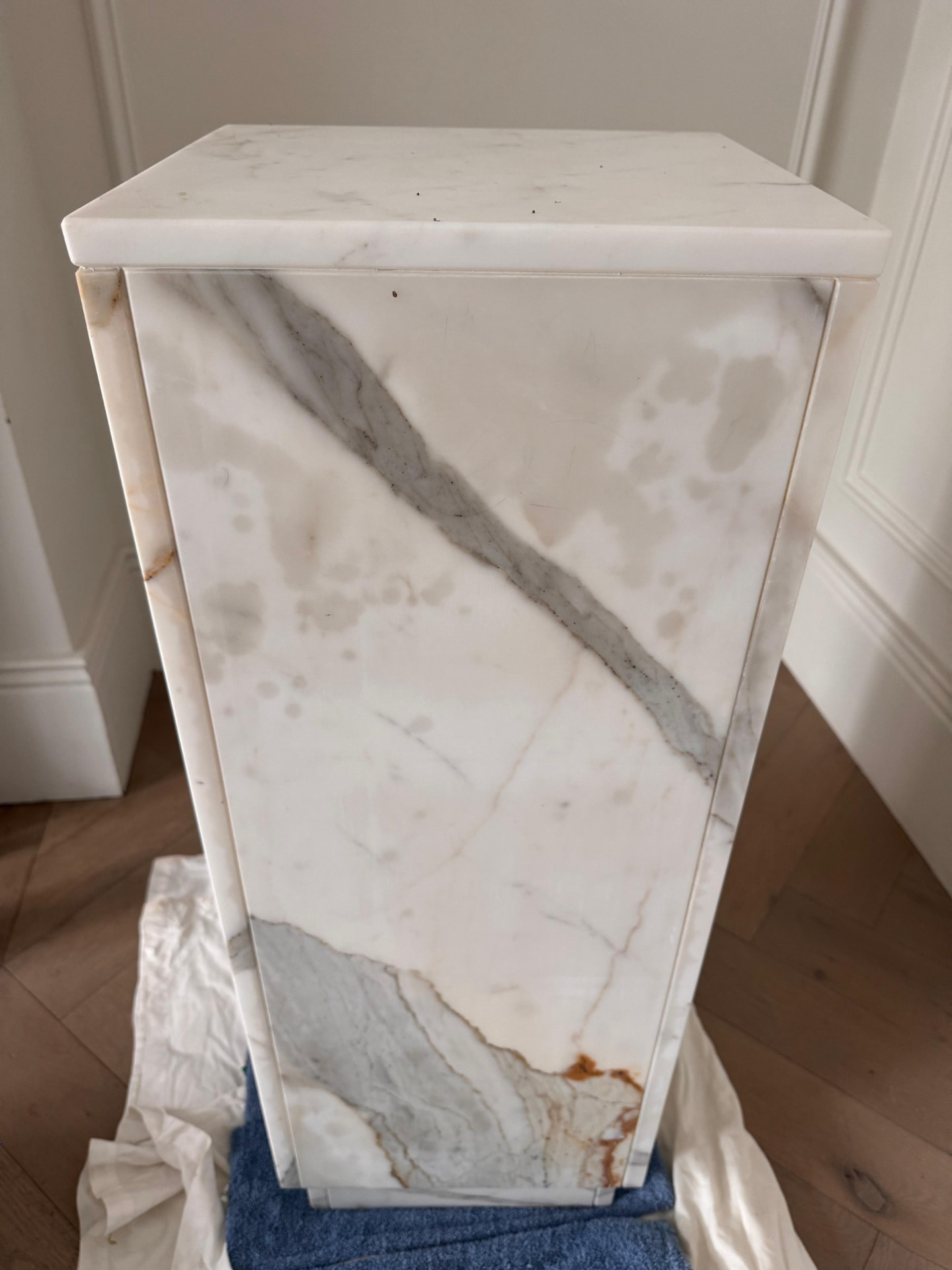
We were recently called to look at a marble plinth with heavy, dark staining. The plinth had been made from an old marble countertop — a lovely piece of reuse — but years of life in a kitchen meant the stone had absorbed cooking oil and grease deep below the surface. By the time it reached its new home, the oil and grease had left dark patches that no amount of surface cleaning would shift.
Why oil and grease are so hard to remove from marble
Marble is porous. When oil or grease sits on it, it doesn't stay on top — it wicks down into the stone, sometimes several millimetres deep. Wiping or scrubbing only cleans the surface, and harsh chemicals can etch the marble and make things worse. The stain you're looking at is inside the stone, so the treatment has to reach inside the stone too.
The process: drawing the oil and grease out
The correct way to remove a deep oil or grease stain is with a poultice — a specialist paste applied over the stained area and left to work. As the poultice dries, it pulls the oil and grease back up out of the pores of the marble and traps it. The paste is then removed, taking the drawn-out contamination with it.
Here's the part people are often surprised by: one application is rarely enough. A poultice can only draw out so much oil and grease at a time, and a stain that has been soaking in for years sits at different depths. Each application lifts another layer of the stain, and the stone needs time to dry fully between treatments so the next poultice can work properly.
Why it takes time — and several visits
On a job like this plinth, the process runs over several visits. Each visit follows the same rhythm: apply the poultice, leave it to do its work, return to remove it and assess how much the stain has lifted, then repeat. Deep, old oil and grease stains typically need multiple applications spread over days or weeks, depending on how far they have travelled into the stone.
It can feel slow, but it's the only approach that actually works — and it's completely safe for the marble. Rushing it with aggressive chemicals or grinding away more stone than necessary would risk permanent damage to a piece that can't simply be replaced.
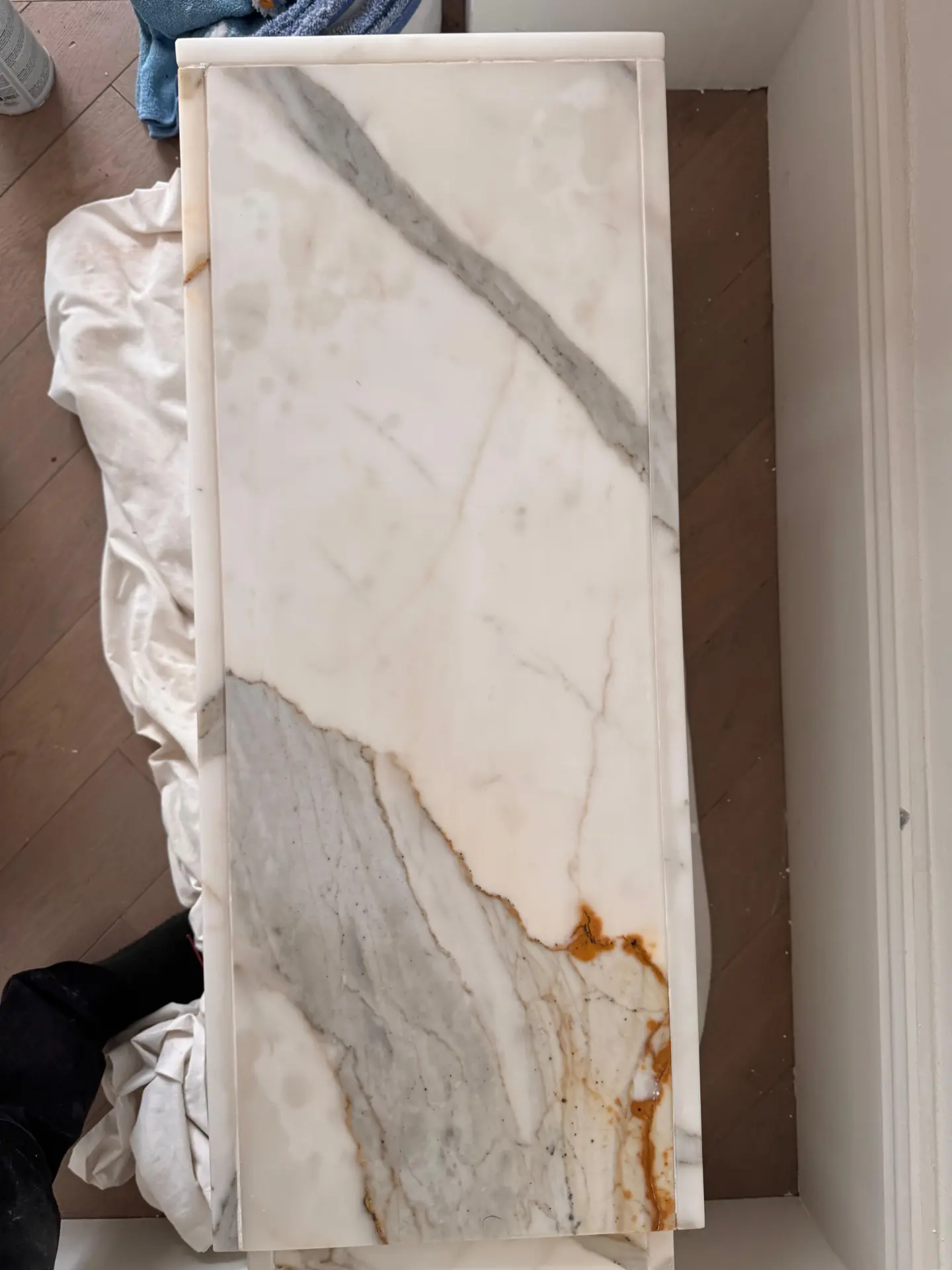
The finish
Once the staining has been drawn out, the surface is refined and polished to bring back the marble's natural depth and veining. A breathable, penetrating sealer can then be applied as an optional final step — it won't change the look of the stone, but it makes it far harder for oil, grease or water to soak in again.
If you have a marble worktop, plinth, hearth or floor with oil or grease staining, get in touch — we'll assess it honestly and tell you exactly what the process will involve before any work begins.
Have an oil- or grease-stained piece of marble?
Free, no-obligation assessments across Dublin, Kildare, Wicklow and Meath.