
Blog · 2 October 2026 · 4 min read
How to Clean Tile Grout: A Professional's Method for Ceramic, Porcelain, Victorian & Quarry Tiles
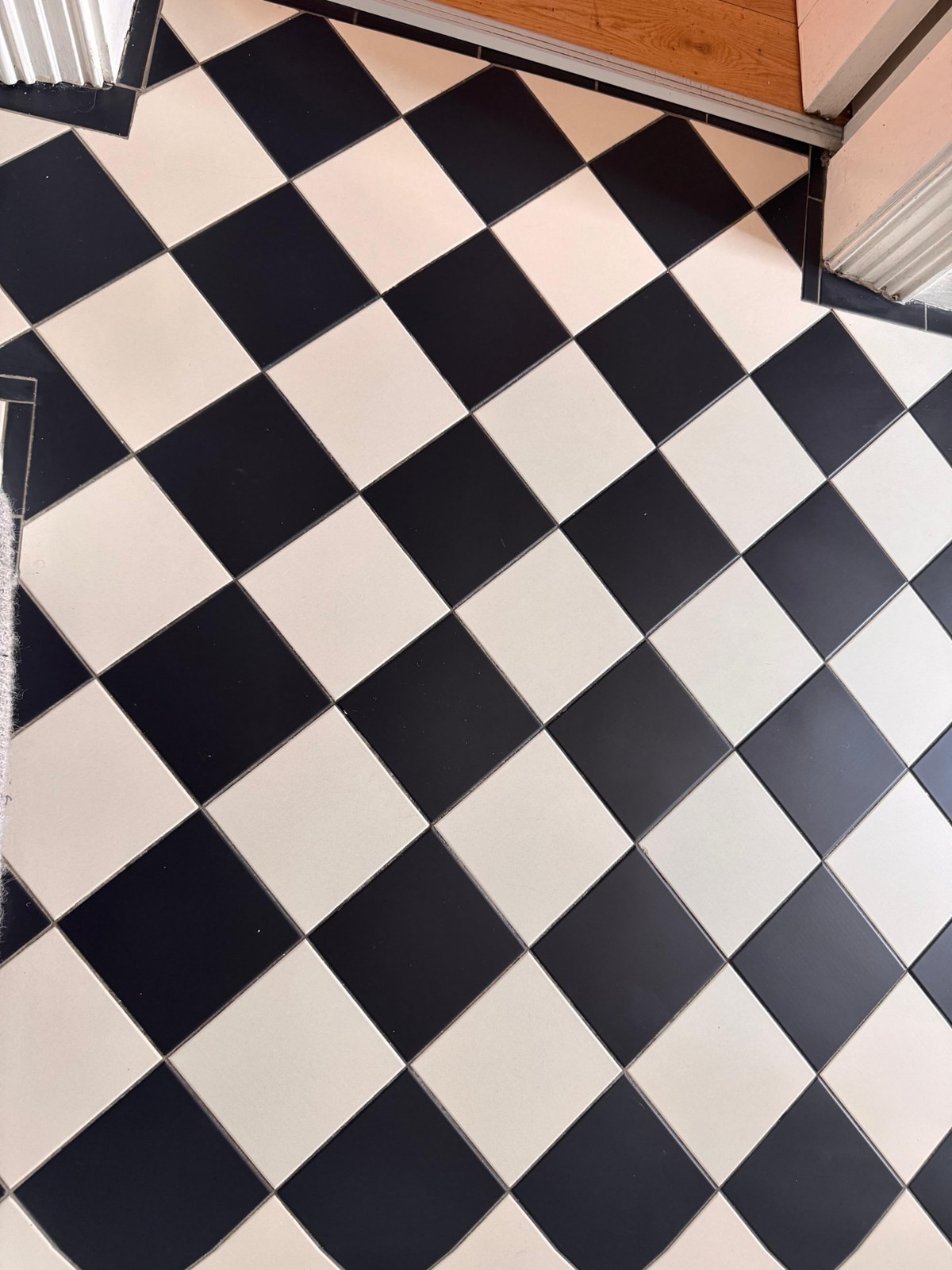
Nine times out of ten, when someone tells us their tiled floor "looks dirty no matter how much they mop", the tiles aren't the problem at all. It's the grout lines. Grout is porous — much more absorbent than the tile above it — so every spill, mop water and bit of foot traffic settles down into it and darkens it. The tiles wipe clean; the grout just holds on.
The good news is that dirty grout usually isn't damaged grout — it's soiled grout, and soil comes out. This is one of the most satisfying jobs we do, because the transformation is instant. Here's how we do it, and how the tile type changes the approach.
Choosing a Faber cleaner for the floor
For heavily soiled grout on tiled floors we use a suitable Faber cleaner. It's mixed as a solution — at the dilution and water temperature on its label — to break down the ground-in dirt, grease and discolouration that everyday cleaning leaves behind in the grout lines. It suits ceramic, porcelain or quarry tiles only where the product instructions allow. We select the cleaner for the tile, grout, existing sealer and soiling.
Step by step: how we clean the grout
- Test first. We check the tile and grout type and test a small, out-of-the-way area before treating the whole floor.
- Dry soil out. The floor is vacuumed or dry-swept so loose grit can't scratch the surface while we work.
- Mix and apply. The selected Faber cleaner is mixed to its label directions and applied to the tiles and grout lines, working a manageable area at a time.
- Let it dwell. A few minutes of contact time lets the solution break down the soiling in the grout — rushing this step is why DIY attempts give patchy results.
- Agitate. We scrub the grout lines to lift the dirt out of the pores. This is where the real work happens, and where the right brush and technique matter.
- Rinse thoroughly. The loosened dirt and slurry are removed with clean warm water. Dirty rinse water gets changed constantly — leaving it on the floor just settles the soil back down.
Ceramic tiles
Ceramic tiles have a glazed surface that shrugs off most things, but their grout lines take a beating — think kitchen floors where every spill and mop-down pushes dirt straight into the joints. On compatible ceramic tiles, we apply the selected cleaner, agitate with suitable equipment and rinse. The skill is in working the grout lines until the colour is even from one end of the room to the other.
Porcelain tiles
Porcelain is dense and low-porosity, so the tile face rarely holds stains — but the grout is the same soft, porous joint as anywhere else. Textured and matt porcelain can also hold dirt in the tile's own surface texture, so we treat the whole floor, not just the lines. The result is a floor where the tiles and the grout look like they belong to the same clean surface again.
Victorian and quarry tiles
These are the floors we're best known for. Victorian hallways and quarry-tile kitchens are unglazed, porous and often a century or more old, and their grout — or the mortar joints between the original tiles — holds decades of tracked-in dirt. The process is the same in principle but gentler in execution: measured dwell times, controlled agitation, and a thorough rinse, because these floors are part of the character of the house. Once the grout is clean and the floor is dry, we recommend protecting the result with a quality sealer — which makes every future clean easier.
How to clean tile grout at home (and keep it clean)
Most grout gets dirty because of how the floor is mopped. A dirty mop and one bucket just spread soil around, and it settles into the grout lines. This routine helps reduce that build-up:
- Vacuum first. Get the loose grit up before any water goes down.
- Measure your cleaner. Use a pH-neutral stone and tile cleaner at the dose on the label. More product doesn't clean better. It leaves a sticky film that holds dirt.
- Use clean microfibre pads. Change the pad when it looks dirty, and keep dirty water away from clean water.
- Lift the dirt off the floor. Pick up the loosened dirt rather than pushing it into the joints, and give the grout lines a gentle brush where needed.
If the grout is already dark, mopping won't bring it back. That needs a deep clean. See our tile and grout cleaning service in Dublin for real before-and-after results.
Keep it clean afterwards
Freshly cleaned grout stays clean a lot longer with the right routine: a pH-neutral cleaner in warm water, a flat mop, and no ordinary detergents — they leave a streaky film that lands straight back in the grout. We explain why in our floor aftercare article. And for newly tiled floors with a hazy film over them, that's a different job — we cover it in our grout and cement residue guide.
What can a deep clean achieve?
If your floor looks tired because of the grout lines, a professional tile and grout clean can remove built-up soiling, but not every permanent stain. Aaron assesses the floor and explains the likely result before starting. We clean tile and grout floors across Dublin, Kildare, Wicklow and Meath, with free, no-obligation quotes.
Grout lines gone dark?
We deep clean grout on ceramic, porcelain, Victorian and quarry tiles — free, no-obligation quotes across Dublin, Kildare, Wicklow and Meath.